Last updated: September 22, 2025
Table of Contents
Decoding the CPU Jargon
Choosing a CPU often feels like reading a secret code. Phrases like "P-cores," "E-cores," and "TDP" flood specification sheets. Before we dive into benchmarks, here is the essential terminology you need to understand the true power of a processor.
Key CPU Terms Explained:
- **Cores & Threads:** Cores are the "brains." Threads are tasks a core can handle simultaneously. More cores/threads = better multitasking.
- **Clock Speed (GHz):** The speed at which the CPU executes instructions. Higher GHz generally means faster single-task performance (important for gaming).
- **TDP (Thermal Design Power):** How much heat the chip generates, measured in Watts. Higher TDP (e.g., 45W+) usually means higher performance but requires better cooling and uses more battery.
- **Integrated Graphics (iGPU):** A small graphics chip built into the CPU. Great for light gaming and video tasks, saving you money by eliminating the need for a separate (dedicated) graphics card.

Understanding Key Benchmarks
Benchmarks are standardized tests that provide a universal score for performance. Don't just look at the final score—understand what it means for your specific use case.
Single-Core Performance
This measures how quickly the CPU can handle one single task. It primarily relies on the CPU's **clock speed**. This score is paramount for tasks that can't be easily split between multiple cores, such as:
- **Gaming:** Crucial for achieving higher frame rates (FPS).
- **Web Browsing/Office Work:** Makes basic applications feel snappy and responsive.
Multi-Core Performance
This measures the CPU's ability to run many tasks simultaneously, utilizing all its cores and threads. This score is vital for demanding, parallel-processing tasks like:
- **Video Rendering & 3D Modeling:** Cuts down export/render times significantly.
- **Heavy Multitasking:** Running a virtual machine while editing a document and streaming music.
The Most Common Benchmark Tools:
- **Geekbench 6:** Excellent for quick single-core and multi-core comparisons.
- **Cinebench R23:** Industry standard for measuring multi-core performance in rendering tasks.
- **3DMark Time Spy:** Measures overall system gaming performance, including the CPU's role.
Intel vs. AMD: The 2025 Showdown
The competition between Intel (Core Ultra series) and AMD (Ryzen 7000/8000 series) is fiercer than ever, offering distinct advantages in 2025.
| Feature | Intel Core Ultra Series | AMD Ryzen Series (7000/8000) |
|---|---|---|
| **Architecture** | Hybrid design (P-Cores for performance, E-Cores for efficiency). | Traditional high-efficiency cores (Zen 4/5 architecture). |
| **Integrated Graphics** | **Arc Graphics:** Significant performance leap, challenging many entry-level dedicated GPUs. | **Radeon Graphics:** Still best-in-class for iGPU performance, excellent for light gaming. |
| **AI Acceleration** | **NPU (Neural Processing Unit):** Highly emphasized for Windows Copilot and AI features. | **Ryzen AI Engine:** Dedicated AI hardware for efficiency in AI-driven tasks. |
| **Key Advantage** | Superior **single-core performance** and high clock speeds, generally leading in peak burst performance. | Exceptional **efficiency and battery life** at similar performance levels. Excellent price-to-performance ratio. |
Matching CPU to Your Needs
The best CPU isn't the fastest; it's the one that best suits your daily tasks and budget.
Recommendation: Mid-range **Intel Core 5** (U-series) or **AMD Ryzen 5** (U-series).
Focus: Prioritize efficiency (low TDP) and battery life over raw power. These chips offer more than enough performance for browsing, streaming, and running productivity software like Microsoft Office or Google Docs.
Recommendation: High-performance **Intel Core 7/9** (H-series) or **AMD Ryzen 7/9** (HS/HX series).
Focus: Gaming is primarily dependent on **single-core performance** and a powerful dedicated GPU. Intel often holds a slight edge in pure single-core speed, but both are excellent. Ensure your laptop has a robust cooling system to handle the high TDP of these chips.
Recommendation: Premium **Intel Core 9** or **AMD Ryzen 9** (HX series).
Focus: Maximize **multi-core performance** and **core count**. Video rendering and compiling code benefit directly from having more threads. The integrated NPU/AI engine on both platforms is also key for accelerating modern editing software features.
Frequently Asked Questions
For basic tasks like web browsing and word processing, a modern quad-core CPU (like a Core i3 or Ryzen 3) is sufficient. However, for smooth multitasking, future-proofing, and demanding applications, a six-core or eight-core processor is highly recommended.
- **U-Series (Ultra-low power):** Focuses on efficiency and long battery life (e.g., 15W TDP). Ideal for thin and light laptops.
- **H-Series (High performance):** Designed for balance (e.g., 45W TDP). Common in mid-range gaming and creator laptops.
- **HX-Series (Extreme performance):** Highest core counts and power draw (e.g., 55W+ TDP). Used in large, powerful desktop replacements and mobile workstations.
For casual use, streaming, and light photo editing, the integrated graphics (like AMD Radeon or Intel Arc) are excellent. However, for demanding 3D gaming, professional video editing, or complex 3D rendering, you will still need a dedicated graphics card (dGPU) from NVIDIA or AMD for the best performance.
The Right CPU for Your Laptop
By understanding the core concepts of single-core and multi-core performance, and the distinct advantages of the Intel Core Ultra and AMD Ryzen series, you are now equipped to choose a laptop that truly matches your performance needs. Remember to always match the CPU's power tier (U, H, or HX) to your primary usage.
Intel Core Laptops
-
د.إ120.00
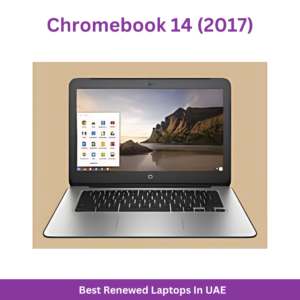
د.إ150.0020% offRefurbished HP Chromebook 14 (2017) Laptop With 14-Inch Display – Quality You Can Trust
Add to cartSold: 100
-
د.إ768.00
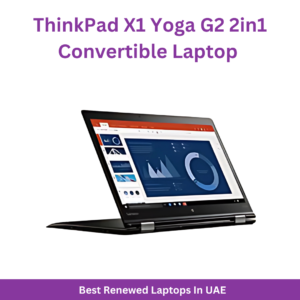
د.إ950.0019% offRefurbished Lenovo ThinkPad X1 Yoga G2 2-in-1 Convertible Laptop – Versatile and Powerful for Professionals
Add to cartSold: 100
-
د.إ548.00
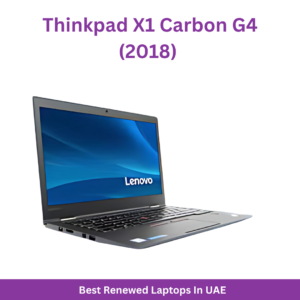
د.إ779.0030% offRefurbished Lenovo ThinkPad X1 Carbon G4 (2018) – Premium Performance for Business Professionals
Add to cartSold: 100
-
د.إ1,962.00
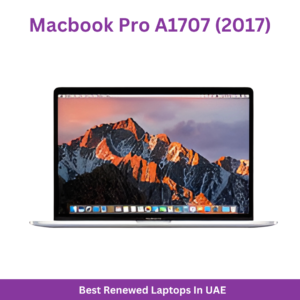
د.إ3,179.0038% offRefurbished Apple MacBook Pro A1707 (2017) – Premium Performance and Stunning Display
Add to cartSold: 100
-
د.إ1,050.00
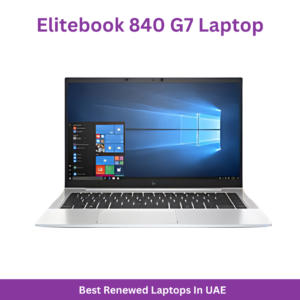
د.إ1,555.0032% offRefurbished – EliteBook 840 G7 Laptop With 14-Inch Full HD Display,Core i5/10th Gen/16GB RAM/512GB SSD/Intel HD Graphics English Silver
Add to cartSold: 100
-
د.إ348.00
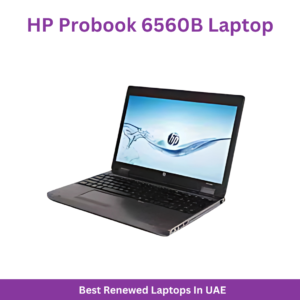
د.إ599.0042% offRenewed – Probook 6560B Laptop With 15.6-inch Display, Intel Core i5 Processor/2nd Gen/8GB RAM/256GB SSD/Intel HD Graphics Black
Add to cartSold: 100
-
د.إ512.00
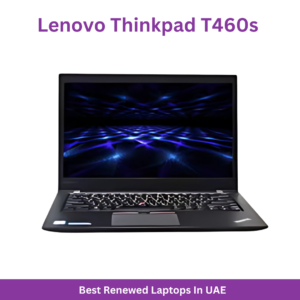
د.إ839.0039% offRenewed – Thinkpad T460s Laptop With 14 Inch Display,Intel Core i7-6600U/8GB RAM/512B SSD/Windows 10 English Graphite
Add to cartSold: 100
-
د.إ419.00
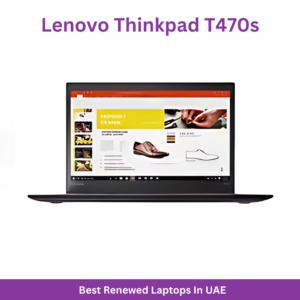
د.إ1,199.0065% offRenewed – Thinkpad T470s Laptop With 14 Inch Display,Intel Core i7-7600U/8GB RAM/1TB SSD/Windows 10 English Graphite
Add to cartSold: 100